Apple Introduced the MacBook Pro with PROLED XDR Display--The First Touch-Screen Mac, Tandem OLED at 2,000 Nits, a Dynamic Island and a Glowing Logo at $2,899 and $3,399, $400 Above the Mini-LED Models, Pre-Orders Open Since October 28 and Arriving November 6
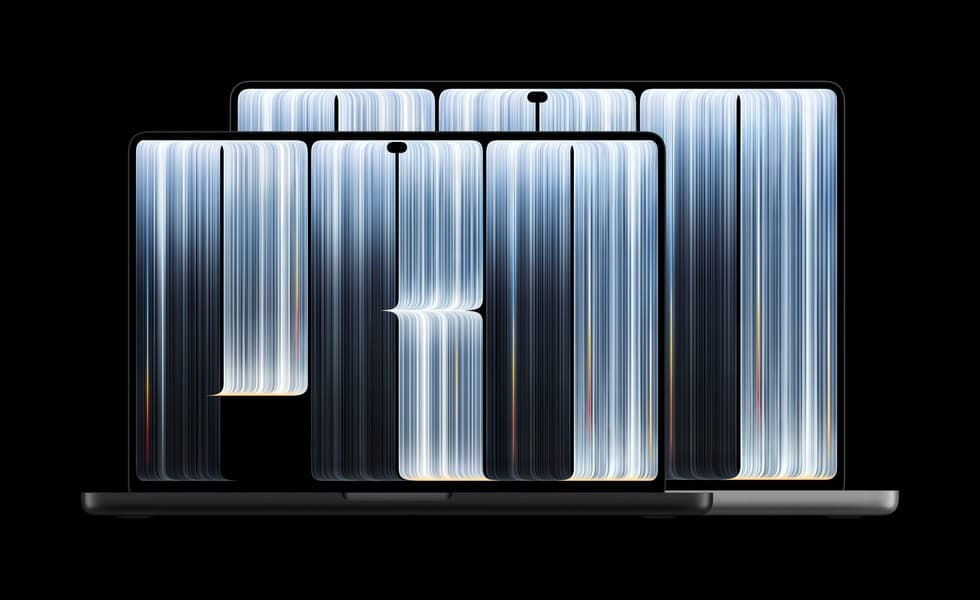
Apple introduced the MacBook Pro with PROLED XDR Display by press release on October 28, the first Mac with a touch screen, in 14-inch and 16-inch sizes with the M5 Pro and M5 Max chips. Apple's press release prices the 14-inch at $2,899 and the 16-inch at $3,399, says pre-orders opened October 28, and puts availability at Friday, November 6. It sits above the mini-LED models, which stay on sale, and it is the machine our October 4 report relayed from Bloomberg and our October 16 report expected at the Los Angeles event.
The display is tandem OLED and the touch sensor is inside it
Apple calls the panel PROLED XDR and says it uses tandem OLED for "up to 2000 nits peak HDR and SDR brightness, an industry-leading 10,000,000:1 contrast ratio for exceptional detail, a 120Hz variable refresh rate, and a wider color gamut covering both P3 and Adobe RGB." Macworld's report adds 1,000 nits sustained across the full screen, and 9to5Mac's report notes the previous peak was 1,600 nits. Smaller bezels make the screens 14.2 and 16.3 inches by MacRumors' report. Touch is in the panel itself: in Apple's words, "the touch sensor is built directly into the display panel" rather than layered on top of it, "reducing latency so users feel like they're touching the content itself." Apple's examples: scroll with a swipe, pinch to zoom on a photo, drag a slide between presentations, and double-tap a window to fill the screen or flick it to tile into place. A new hinge holds the screen steady under a finger, and 9to5Mac notes that Touch ID stays and there is no Face ID.
Thinner, lighter, a Dynamic Island and the logo lights up again
The 14-inch weighs 3 pounds, half a pound less than the mini-LED model, and the 16-inch 4 pounds, down from 4.7 by 9to5Mac's figures; Apple says the 16-inch is "nearly a millimeter thinner." The notch gives way to a Dynamic Island, which Apple makes the home of Spotlight, Siri AI and Live Activities. The Apple logo on the lid glows again, and MacRumors' logo report says the illuminated logo left with the 2016 redesign. The chips are the M5 Pro and M5 Max Apple introduced in March, memory goes to 128GB, and storage to 16TB, which MacRumors' storage report says is double the previous limit and costs $7,000 over the top M5 Max model's standard 2TB. The six-speaker system has "50 percent deeper bass," and MacRumors' battery report says the battery estimates match the mini-LED models', up to 24 hours of video on the 16-inch M5 Pro and 22 on the 14-inch.
What it costs, and what the mini-LED models still cost
There are four starting prices: $2,899 for the 14-inch M5 Pro, $3,399 for the 16-inch M5 Pro, $4,499 for the 14-inch M5 Max and $4,799 for the 16-inch M5 Max, with education prices of $2,749, $3,199, $4,199 and $4,499. Macworld puts the premium at $400 over the comparable non-OLED models, and MacRumors' MacBook Pro roundup lists the mini-LED 14-inch M5 Pro at $2,499 and the 16-inch at $2,999.
Why Apple changed its mind
In October 2021, 9to5Mac's report of a Wall Street Journal interview quoted John Ternus, then Apple's hardware chief: "We make the world's best touch computer on an iPad. It's totally optimized for that. And the Mac is totally optimized for indirect input. We haven't really felt a reason to change that." On October 28, MacRumors' interview report of Wired's interview quoted Ternus, now CEO: "The Mac is first and foremost an indirect input device, built around the trackpad and keyboard. But I think there's times when it's comfortable and handy to have touch." His condition: "adding touch didn't make the product lesser in any way. It didn't make it heavier. It didn't make it thicker." Johny Srouji told Wired the display, the chips and the software had reached Apple's bar. We asked whether Apple would build one in our 2003 commentary on an Apple tablet, and our 2007 report on the ModBook found the only tablet Mac of its day was a MacBook with a Wacom pen screen that OWC sold at $2,279 to $2,849.
Then and now
On October 29, 1997, we pointed readers to PowerPage's new specs for the upcoming PowerBook G3, "some machine and it is a bridge to the next generation of PowerBooks." Twenty-nine years on, the next generation of Apple's pro notebook arrived by press release, with a Los Angeles press event in place of a show floor and a screen you can touch. At $400 over the mini-LED model with the same chips, the display is what Apple is charging for, and we would pay it for the display before we paid it for the touch.
Sources
- Apple Newsroom, “Apple unveils groundbreaking MacBook Pro with PROLED XDR Display - Apple” accessed Oct 29, 2026
Cupertino, October 28, 2026: "Apple today introduced the all-new MacBook Pro with PROLED XDR Display, featuring breakthrough tandem OLED technology"; 14- and 16-inch models; "up to 2000 nits peak HDR and SDR brightness, an industry-leading 10,000,000:1 contrast ratio for exceptional detail, a 120Hz variable refresh rate, and a wider color gamut covering both P3 and Adobe RGB"; "MacBook Pro features Touch for the first time"; "the touch sensor is built directly into the display panel — not layered on top of it — reducing latency so users feel like they're touching the content itself"; the swipe, pinch, drag-and-drop, double-tap and flick gestures; "The 14-inch MacBook Pro now weighs half a pound less at 3 pounds, while the 16-inch MacBook Pro weighs just 4 pounds"; "the 16-inch model nearly a millimeter thinner"; "The Dynamic Island now comes to Mac, serving as the home for Spotlight", Siri AI and Live Activities; M5 Pro and M5 Max; "up to 128GB of unified memory"; "now up to 16TB of blazing-fast storage"; "six-speaker sound system now provides 50 percent deeper bass"; "available to pre-order starting today, October 28, with availability beginning Friday, November 6"; the 14-inch with M5 Pro "starts at $2,899 (U.S.)" and $2,749 with education savings, the 16-inch with M5 Pro $3,399 and $3,199, the 14-inch with M5 Max $4,499 and $4,199, the 16-inch with M5 Max $4,799 and $4,499; the page's family lineup picture, Apple-MacBook-Pro-with-PROLED-XDR-Display-family-lineup-261028_big.jpg.large.jpg; accessed October 29, 2026.
- MacRumors, “Apple Announces OLED MacBook Pro With Touch Display - MacRumors” accessed Oct 29, 2026
Juli Clover, Wednesday October 28, 2026, 10:11 am PDT: "Smaller bezels mean the 16-inch MacBook Pro display is now 16.3 inches in size, while the 14-inch MacBook Pro is now 14.2 inches"; "A new hinge design offers more stability when using touch"; "Apple is selling the OLED MacBook Pro models alongside the existing mini-LED models and the new M6 14-inch MacBook Pro"; "Pre-orders are available now, with a launch coming on Friday, November 6"; accessed October 29, 2026.
- MacRumors, “Apple Executives Explain Why the MacBook Pro Finally Has a Touch Screen - MacRumors” accessed Oct 29, 2026
Juli Clover, Wednesday October 28, 2026, 11:25 am PDT, on Wired's interview with John Ternus, Johny Srouji and Greg Joswiak: Ternus, "The Mac is first and foremost an indirect input device, built around the trackpad and keyboard. But I think there's times when it's comfortable and handy to have touch"; Ternus, "We needed to get to a point where adding touch didn't make the product lesser in any way. It didn't make it heavier. It didn't make it thicker"; Srouji said display technology, Apple silicon and software had evolved enough to meet Apple's bar; accessed October 29, 2026.
- MacRumors, “Adding Touch Didn't Cost the MacBook Pro Any Battery Life - MacRumors” accessed Oct 29, 2026
Juli Clover, Wednesday October 28, 2026, 11:54 am PDT: "Both the PROLED and the mini-LED 14-inch and 16-inch MacBook Pro models offer the same maximum battery life estimates"; 16-inch M5 Pro "Up to 24 hours streaming video"; 14-inch M5 Pro "Up to 22 hours streaming video"; accessed October 29, 2026.
- MacRumors, “Illuminated Apple Logo Returns to MacBook Pro After 10 Years - MacRumors” accessed Oct 29, 2026
Hartley Charlton, Wednesday October 28, 2026, 10:12 am PDT: the illuminated rear Apple logo returns to the MacBook Pro; it was removed in the 2016 MacBook Pro redesign; accessed October 29, 2026.
- MacRumors, “New MacBook Pro Offers Up to 16TB of Storage, Double Previous Limit - MacRumors” accessed Oct 29, 2026
Hartley Charlton, Wednesday October 28, 2026, 10:52 am PDT: storage up to 16TB, from the previous 8TB maximum; "Upgrading the highest-end M5 Max configuration from its standard 2TB SSD to 16TB costs $7,000"; accessed October 29, 2026.
- MacRumors, “MacBook Pro: Should You Buy? Reviews and More - MacRumors” accessed Oct 29, 2026
MacRumors' MacBook Pro roundup as read October 29, 2026: "Pricing on the 14-inch M5 Pro model starts at $2,499, while pricing for the 16-inch M5 Pro model with mini-LED starts at $2,999"; accessed October 29, 2026.
- 9to5Mac, “Apple announces all-new MacBook Pro with PROLED XDR display, its first touchscreen Mac - 9to5Mac” accessed Oct 29, 2026
Zac Hall, October 28, 2026, 10:06 am PT: the M5 Pro and M5 Max chips match the MacBook Pro lineup released in March 2026; peak brightness "2000 nits for HDR content," up from 1600 nits on previous generations; the 14-inch weighs 3 pounds, down from 3.5 pounds, and the 16-inch 4 pounds, down from 4.7 pounds; Touch ID included, no Face ID; accessed October 29, 2026.
- Macworld, “Apple's new MacBook Pro with PROLED XDR Display: 5 top features - Macworld” accessed Oct 29, 2026
Roman Loyola, October 28, 2026: the 14- and 16-inch models start at $2,899 and $3,399, "That's $400 more than the comparable non-OLED models"; the display reaches "1,000 nits sustained full-screen, 2,000 nits peak for HDR content"; accessed October 29, 2026.
- 9to5Mac, “Apple explains why it hasn't added a touchscreen or Face ID to the Mac - 9to5Mac” accessed Oct 29, 2026
Chance Miller, October 29, 2021, on Joanna Stern's Wall Street Journal interview with John Ternus, then senior vice president of hardware engineering: "We make the world's best touch computer on an iPad. It's totally optimized for that. And the Mac is totally optimized for indirect input. We haven't really felt a reason to change that"; accessed October 29, 2026.
Saw something? Send a tip or a correction
The archive ran on reader tips. What did you see, where, and do you want the credit? Something wrong on this page? Say so and it gets fixed.